

Children ages 6 to 12 enter Montessori’s second plane of development. Their growing powers of imagination and reasoning fuel big questions about how things work, why things happen, and how ideas connect.
With growing capability comes greater freedom—and greater responsibility. Children make more decisions about how they use their time and approach their work; teachers provide structure, expectations, and guidance along the way.
Relationships take on new importance, too. Elementary children are eager to collaborate with peers, increasingly attuned to fairness and justice, and ready to take greater responsibility within their communities.
Elementary builds on Montessori’s mixed-age model through two three-year communities. Lower Elementary brings together children ages 6 to 9 (grades 1–3) in Cedar, Olive, and Poplar, while Upper Elementary students ages 9 to 12 (grades 4–6) learn in Sequoia, Sycamore, and Walnut.
At this stage, students are ready for greater independence. With guidance from their teachers, they begin taking more ownership of their time and their work—making choices, pursuing questions that capture their interest, and discovering how they learn best.
Students still have many opportunities to learn from and guide one another, whether they’re explaining their thinking, collaborating on work, or stepping into greater leadership. But as their confidence and independence grow, the world also begins to open up. Children look beyond the classroom, explore their individual interests more deeply, and discover new ideas and possibilities.
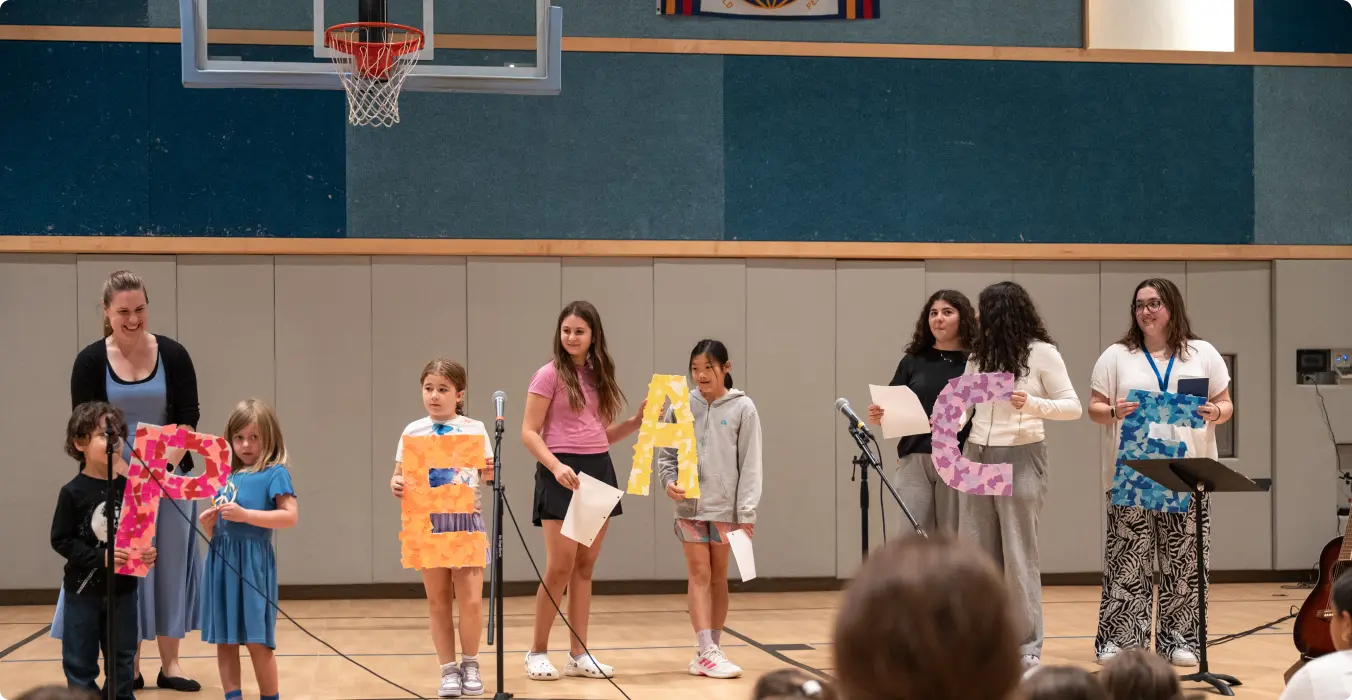
Students create a classroom Peace Promise rooted in their shared values. Each week, the class comes together to discuss real issues within their community, with a student “Peacekeeper” helping guide the conversation.
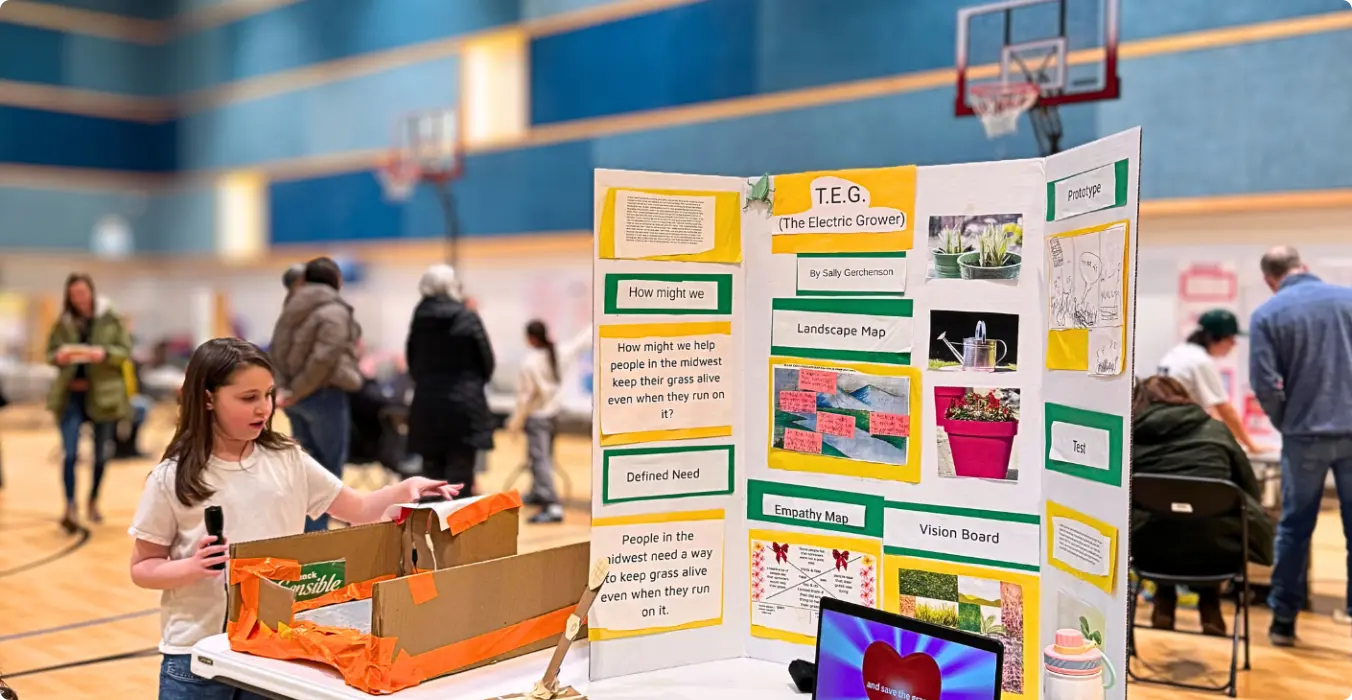
Upper Elementary students take their curiosity into increasingly independent research projects through an annual Cultural Fair. Imaginary Island, Design for Good, and Science Fair rotate on a three-year cycle, giving every student the opportunity to experience all three.
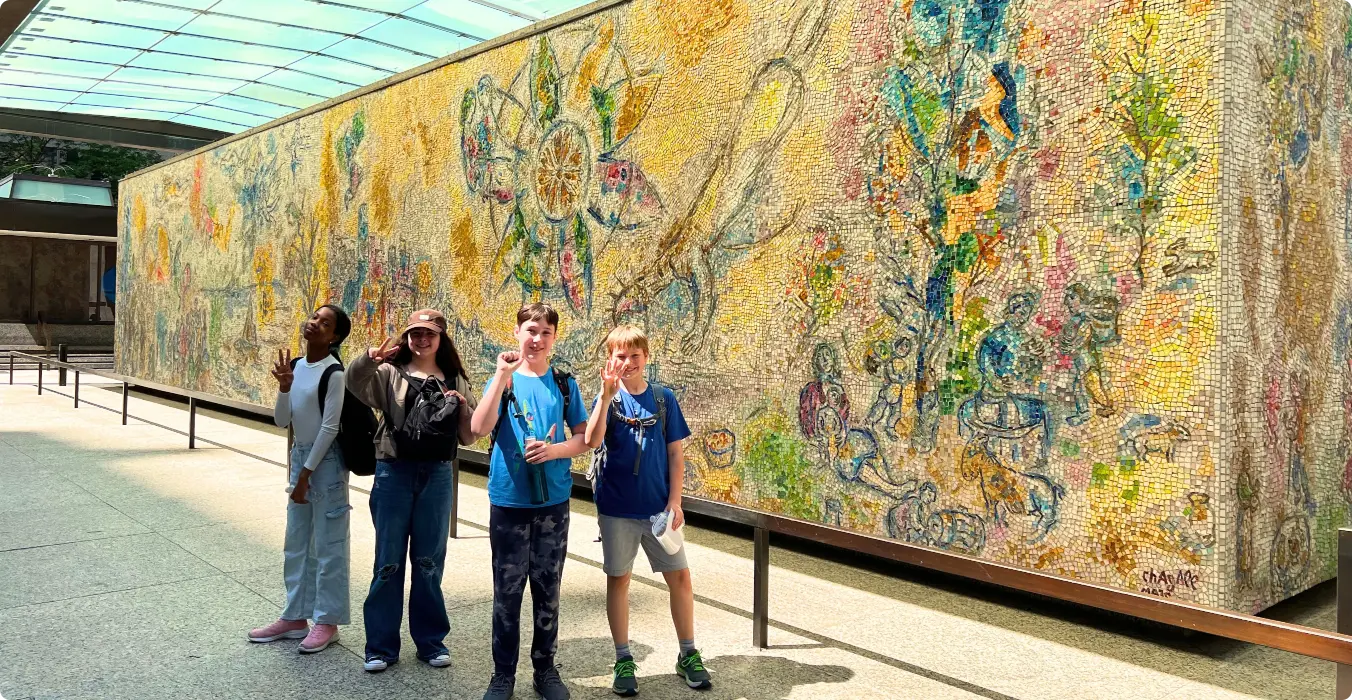
At the end of sixth grade, students navigate their way through Chicago in RPMS’s version of “The Amazing Race.” An adult chaperone is along for the ride, but they leave the route-finding and problem-solving to the students before they move on to Aspen Middle School.
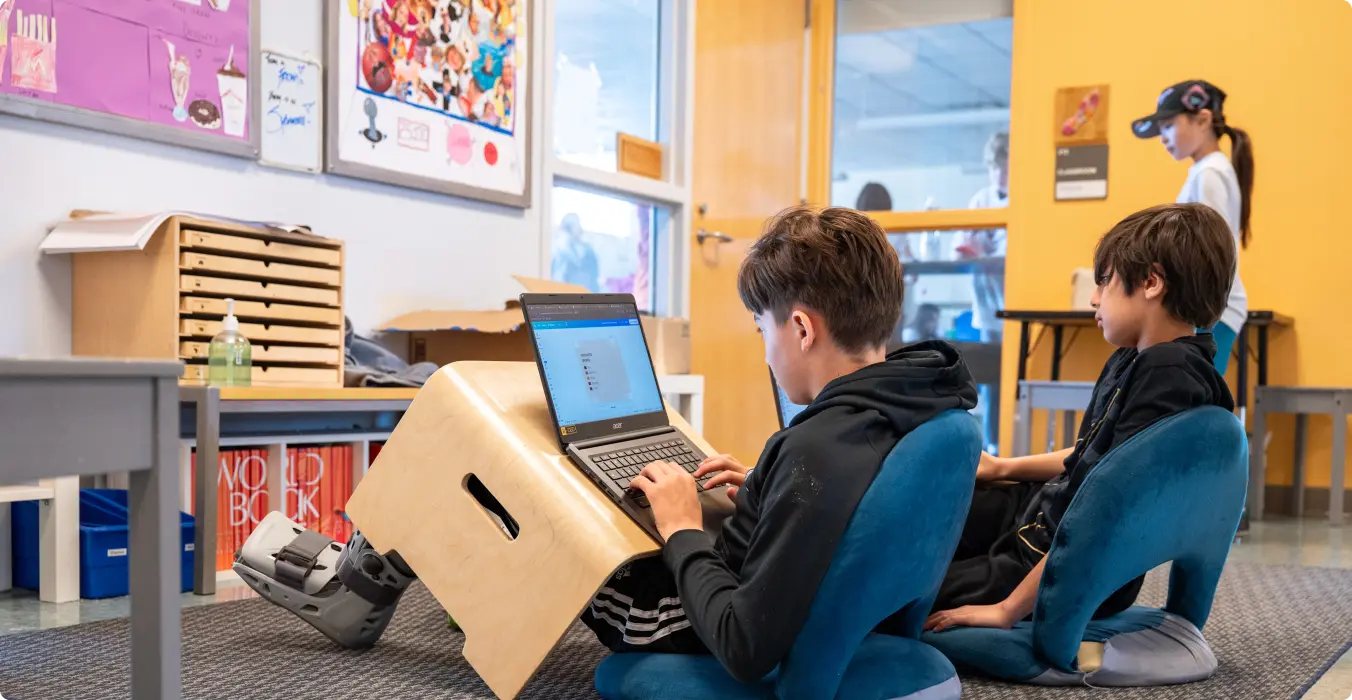
Technology is introduced intentionally as students grow. In third grade, Lower Elementary students begin using shared laptops for purposeful research; in Upper Elementary, shared devices become increasingly familiar tools for research, collaboration, organization, and creation.
Students take greater ownership of their work and time. Individual work plans help children balance required work with opportunities to follow their interests, while teachers guide them in setting priorities, managing time, and making thoughtful choices.
Freedom comes with greater responsibility. Classroom jobs—from caring for plants to maintaining shared spaces—help students understand that being part of a community means contributing to it.
Cosmic Education invites children to ask bigger questions. Montessori’s Great Lessons introduce sweeping stories of the universe, life on Earth, human beings, language, and mathematics, sparking investigations across the curriculum.
Opportunities beyond the core classroom continue to expand. Students add Art, Music, PE, Drama, and Woodworking in the Innovation Studio, while Spanish instruction increases in frequency. Field trips and special projects offer even more ways to discover interests and apply what they know.
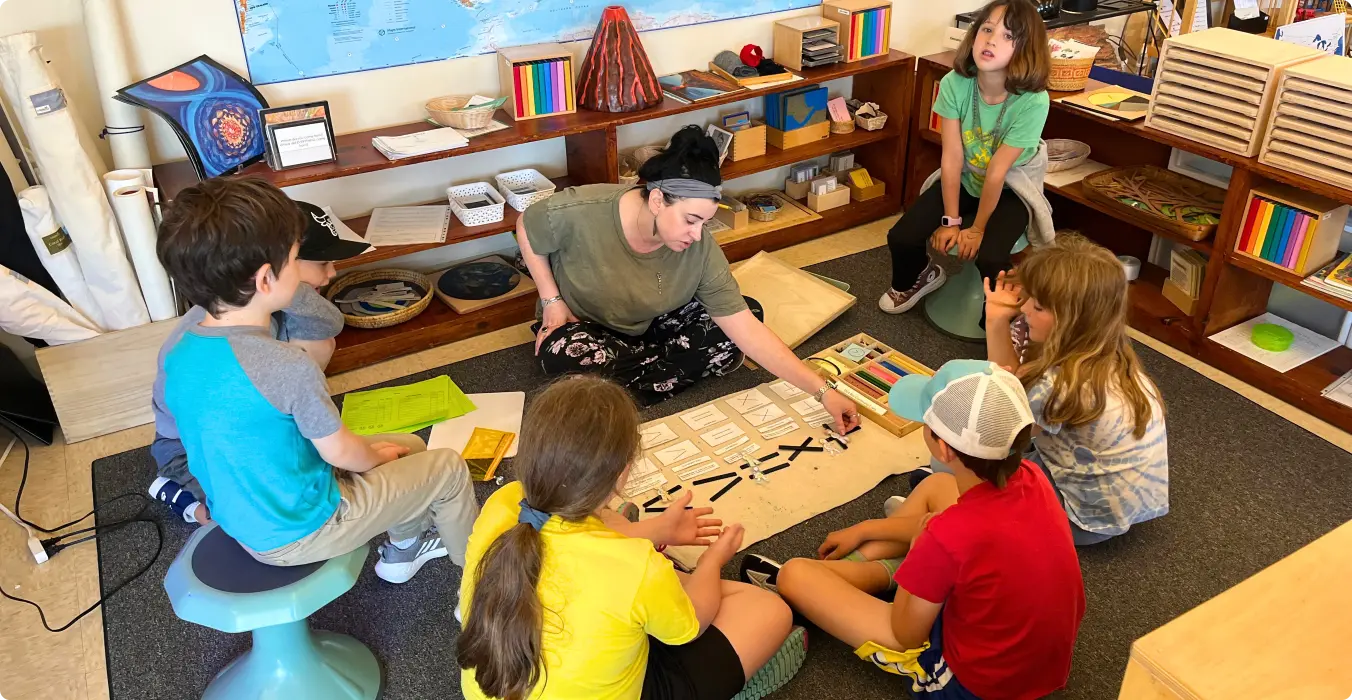
At RPMS, assessment begins with knowing the child. Teachers observe students at work, confer with them regularly, and use what they learn to offer support or a new challenge at the right moment.
Rather than receiving letter grades, students’ growth is documented in detail. In grades 1–6, reports cover academic and developmental benchmarks. Parent-teacher conferences provide additional context, while end-of-year portfolios offer a tangible record of each child’s work and progress.
Dedicated Lower and Upper Elementary learning specialists work alongside classroom teachers to identify individual needs and plan support.
More formal measures are introduced gradually as students grow. Beginning in third grade, students take MAP assessments twice a year. In sixth grade, they also gain experience with traditional math textbooks and quizzes as they prepare for Middle School.
In Lower Elementary, new skills give children new ways to explore. As they grow more confident in reading, writing, math, and independent work, they gain new tools for pursuing the questions and interests that capture their attention. Teachers provide structure and guidance while gradually giving children more responsibility for their work, relationships, and classroom community.

Every day begins with a morning meeting, giving the class time to connect, check in, and prepare for the day ahead. Once a week, the Spanish teacher conducts the entire meeting in Spanish, giving students an additional opportunity to experience the language.

During the morning work cycle, students use individual work plans to navigate independent work and individual or small-group lessons across subject areas, making choices about how to organize their time and attention.

After lunch and recess, students return to work plans, classroom responsibilities, and co-curricular learning.

Throughout the week, students travel beyond their homerooms for Art, Music, Drama, PE, and Woodworking in the Innovation Studio. These classes complement the homeroom curriculum, often giving students new ways to explore familiar ideas through movement, creative expression, design, and hands-on problem-solving. Students also visit the Spanish Suite twice each week in single-grade groups.
Lower Elementary is a time of tremendous growth in reading and writing. At RPMS, teachers combine Montessori language materials with structured, research-based literacy instruction, meeting children where they are as they develop into increasingly confident readers and communicators.
Lower Elementary math moves from concrete understanding toward abstraction, helping children develop greater comprehension, confidence, and enjoyment as mathematical ideas become more complex. Hands-on Montessori materials allow students to see and manipulate mathematical relationships before relying on numbers and symbols alone.
In Lower Elementary, Montessori’s Cosmic Education gives children a sweeping introduction to the universe and their place within it. The Great Lessons tell big stories about the formation of the universe, the development of life and human beings, and the origins of language and mathematics. Along the way, children begin seeing connections across subjects and the interdependence and interrelatedness of all people, plants, and animals.
In Upper Elementary, the skills children have spent years building become tools for deeper learning. Students shift from “learning to read” toward “reading to learn,” using their growing abilities to pursue complex questions, conduct independent research, and share ideas with others. Teachers remain close guides, offering challenge and structure while giving students more room to make decisions and discover what they’re capable of.
Every day begins with a morning meeting, giving the class time to connect, share information, and prepare for the day ahead.
During the work cycle, students use individual work plans to navigate independent work, collaborative projects, and individual or small-group lessons. As assignments grow more complex, students take greater responsibility for setting priorities, managing time, and following work through to completion.
After lunch and recess, afternoons may include continued work-plan time, research and projects, classroom responsibilities, presentations, and co-curricular learning.
Throughout the week, students travel to Art, Music, PE, Drama, Spanish, and Innovation Studio. Spanish meets three times each week in single-grade groups, while Innovation Studio expands into increasingly sophisticated design, making, technology, and Digital Citizenship.
In Upper Elementary, reading and writing become increasingly powerful tools for learning, thinking, and communicating. Students engage with more complex fiction and nonfiction while strengthening the skills they need to analyze ideas, conduct research, organize their thinking, and express themselves clearly for different purposes and audiences.
In Upper Elementary, students move increasingly from concrete materials toward abstract mathematical thinking, but familiar Montessori materials don’t simply disappear. Instead, they take on new purposes, helping students see the relationships behind increasingly sophisticated concepts before moving toward abstraction.
In Upper Elementary, Cosmic Education moves from the sweeping stories introduced in Lower Elementary toward deeper investigations of human history, science, geography, and the relationships that connect them. Students examine how people have lived, adapted, solved problems, and shaped their communities while continuing to explore the interdependence and interrelatedness of people and the natural world.
A: Yes. Children arrive at RPMS at different points in their educational journeys, and prior Montessori experience is not required. Teachers meet new students where they are, helping them become comfortable with the classroom routines, materials, and greater independence of a Montessori work cycle. The admissions process also gives us time to get to know your child and consider whether RPMS is the right place for them to thrive.
A: Choice in a Montessori classroom doesn’t mean anything goes. Students make choices within a robust, carefully sequenced Montessori curriculum. Teachers present lessons, closely observe each student’s progress, and help children plan work that stretches their skills while leaving room to pursue what sparks their curiosity. They know when a student is ready to work independently—and when to step in with more guidance or challenge.
A: Lower and Upper Elementary students attend Monday through Friday from 8:15 a.m. to 3:15 p.m. Families may add early arrival beginning at 7:30 a.m.; this is offered as one five-day option. Aftercare is available until 6 p.m. and may be selected for two, three, four, or five afternoons per week.
Where children learn to follow their own lead — right here in Chicago’s Andersonville neighborhood.
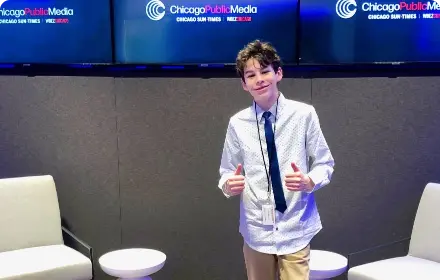
Information about joining the RPMS community, including admissions, tuition, and financial aid.
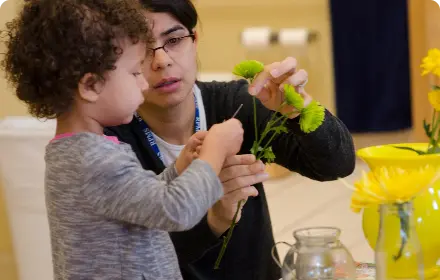
Each stage of our Montessori journey builds confidence, independence, and a lifelong love of learning.
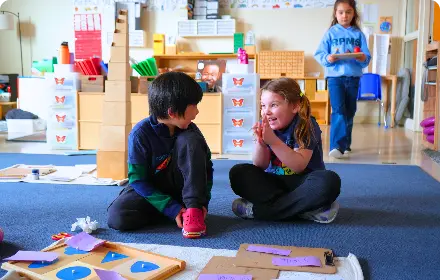
Our shared values guide us to peace within self, relationships, school, community, and the greater world.