
“I’ve been part of Explorers for nearly thirty years now — long enough to watch afternoons grow into big memories.”
— Joan
When asked about her favorite Explorers moment, Joan doesn’t hesitate — and then immediately does.
“There are too many,” she laughs, before landing on a memory from the roof during a freezing afternoon years ago: children huddled together on a bench, sharing warmth, space, and companionship. But her truest favorite, she realizes, came later — the year Explorers didn’t happen.
During the pandemic, aftercare was paused to keep classroom groups separate. Joan spent that year assisting in a classroom instead. “I missed it so much,” she says. “Coming back after that — especially knowing how much children needed belonging — made me realize just how important Explorers really is.”
Choice, Cooperation, and the Long View
Ask Joan about her main goal for Explorers, and the answer stretches well beyond snack, games, crafts, or recipes.
She talks instead about cooperation.
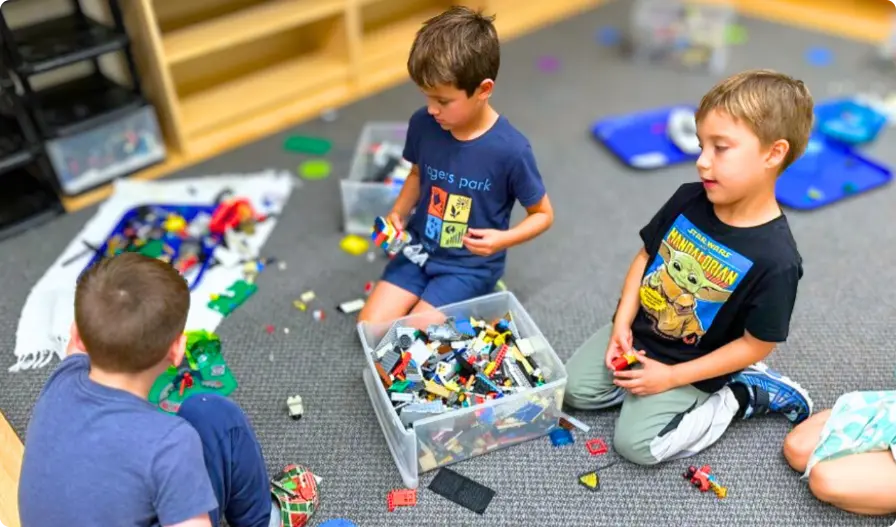
Drawing on Montessori’s belief in education for peace, Joan describes Explorers as a place where children learn that conflict doesn’t have to produce winners and losers. “If one child wants to build a fort and another wants to play Legos in the same space,” she explains, “the question becomes: How can we make this work?”
Sometimes children hash it out themselves. Sometimes adults step in. But the experience — learning that creative, shared solutions are possible — is the lesson.
As Reese points out, those moments often involve Legos. “Legos started so many fights in Explorers,” Abby adds.
Joan laughs. “They also inspired that cooperation I was talking about! The children came up with their own solutions which often involved treaties, rules, or peace agreements.”
“You matter here.”
What Explorers offers, Abby and Reese agree, is something many after-school programs don’t: real choice.
Art materials are always available. Board games that resurface year after year. Dollhouses that evolve — including one memorable moment when children noticed that all the figures were white, sparking a group decision to diversify the tiny world they were playing in.
Cooking projects become opportunities to work with a partner or in a group. Most cooking projects are made with a friend: soup, bagel pizzas, pretzels, pies. Others become community rituals like latkes. Someone peels, someone shreds, someone grabs the Band-Aids — everyone belongs.
“It makes you feel included,” Reese says. “Like, you matter.”
Joan nods. “I want children to leave Explorers knowing their own power — that they’ve had experiences where they made changes, worked with others, and created something positive.”
Growing Up in Explorers
One of the quiet magic tricks of Explorers is time.
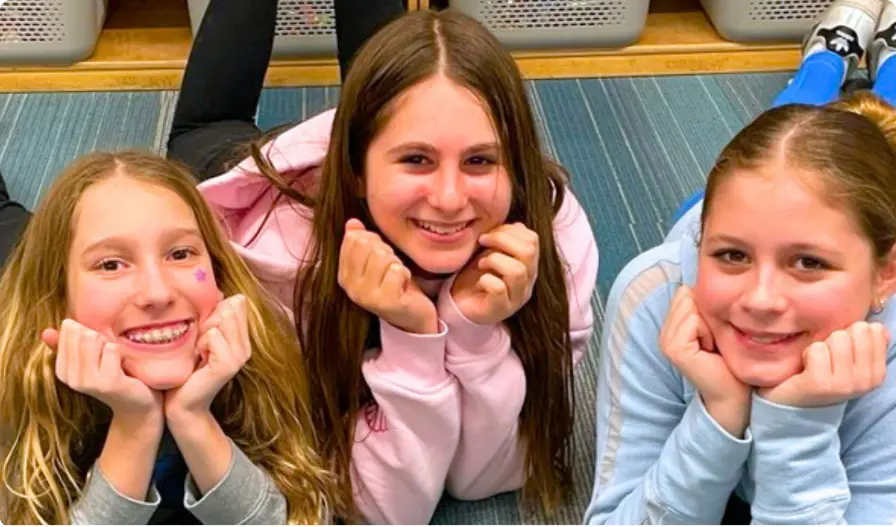
Joan has watched children move through the program from first grade all the way to eighth. She sees leadership emerge naturally — older students adjusting games so younger ones can join, making space, modeling patience.
“It feels like an extended family,” she says.
And while Explorers can be loud, messy, and occasionally chaotic, something else is always present: trust.
“There really aren’t discipline problems,” Joan explains. “If someone has a lot of energy, they go to the gym. The adults are there — always watching, always ready — but not controlling.”
The clearest sign of success is simple: At the end of the day, children don’t want to leave.
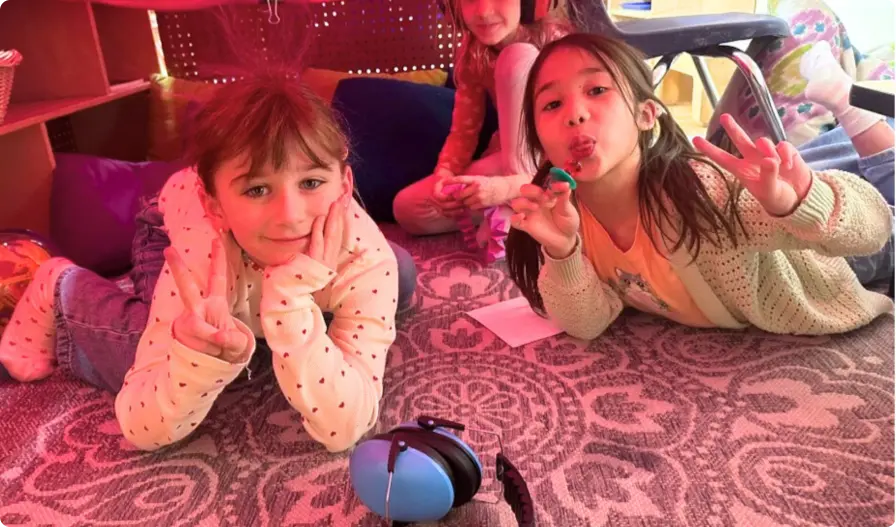
“They’re happy. And that’s the proof.”
If a parent could observe Explorers for just a moment, Joan hopes they would see children who feel free — but never unattended. Independent — but deeply supported. Happy — not because the day is easy, but because it’s theirs.
In the long arc of a school day, Explorers is not an afterthought. It’s a continuation — a place where cooperation is practiced, creativity is trusted, and children learn that their voices, ideas, and relationships matter.
Or, as Abby puts it: “You guys always set a high bar for us. And it made us feel capable of rising to it.”
As Joan reflected on her conversation with Reese and Abby she had the following thoughts:
Sitting with Reese and Abby I realize that Explorers will be a memory of childhood for them. And while I have so many memories to cherish, for me Explorers will always be about the opportunity to witness, in the way Montessori thought of it, children, as they create the adults they will one day become. It struck me that that day is not so far off for Reese and Abby, so poised, self-possessed, confident, optimistic, funny and smart.
In Explorers, we are fortunate to have so much to offer. The most important thing we do is to allow space for children to pursue their own plans and initiatives. And when conflicts erupt, we seek solutions together that meet all the needs. The point is not to get through the afternoons without fighting, discord and dissension. If it were, adults would step in, decide what is fair and impose solutions. And, to be sure, sometimes we must, especially when emotions are running hot. In the end, it doesn’t matter whether one child understands or values the initiatives of another so long as they value and support that child’s right to choose as they have, and so long as they are respected and supported in return.
Our hope is that this practice will extend far beyond our afternoons here. As we work to share our space and our resources, equitably, respectfully, Explorers becomes its own small society, a community of autonomous individuals, each making their own choices, each pursuing their own plans and dreams, in respectful cooperation with others. A vision of a world where people live in harmony becomes possible. The children believe in that possibility because they have that lived experience: they have confidence in that vision. That is the power I wish parents could see. That is the power I want them to have as they leave Explorers. That is the power that makes change possible.