

Middle Schoolers are in Montessori’s third plane of development, an exciting, turbulent time of growth and transformation.
These adolescents are forming a solid understanding of their place in the world; building an identity outside of their family and friends; and defining justice and fairness on their own terms.
Middle School students are ready for more independence, but they still benefit from clear expectations and steady guidance as they figure out how to manage their time and work.
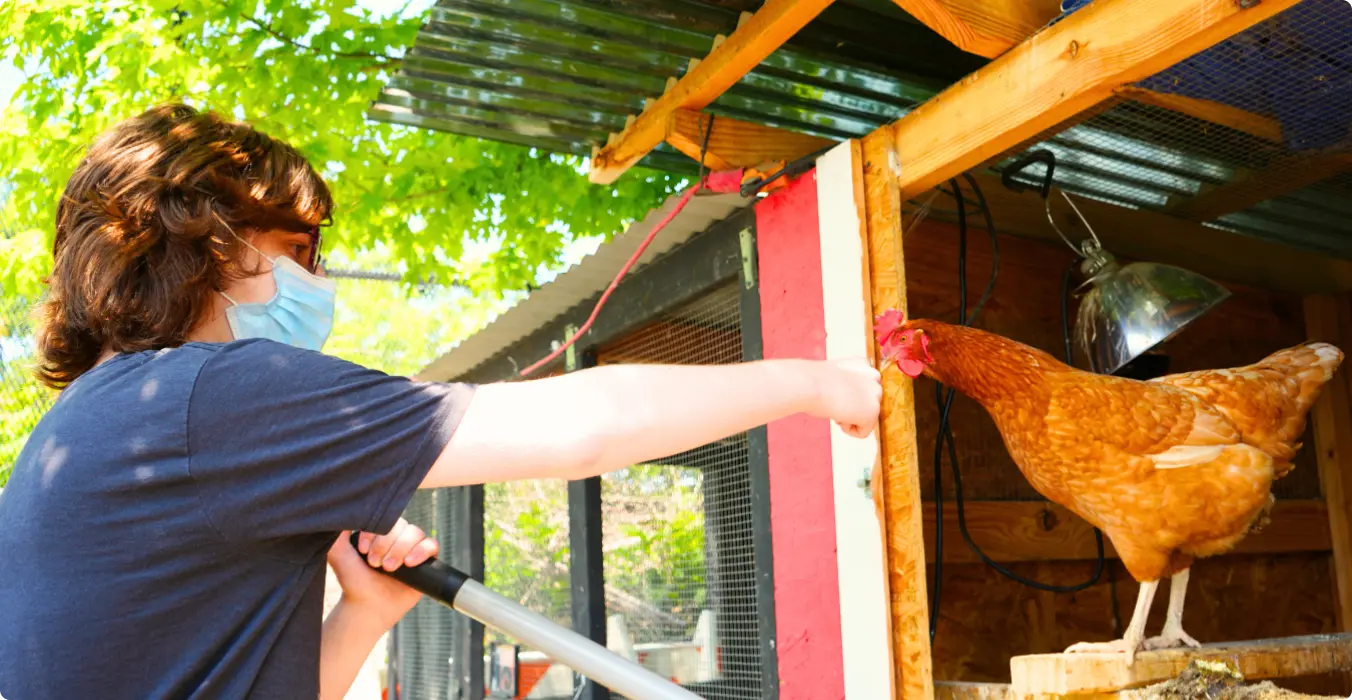
Aspen students design and operate class businesses and complete weeklong internships, putting their ideas and practical skills to work in settings where their decisions matter.
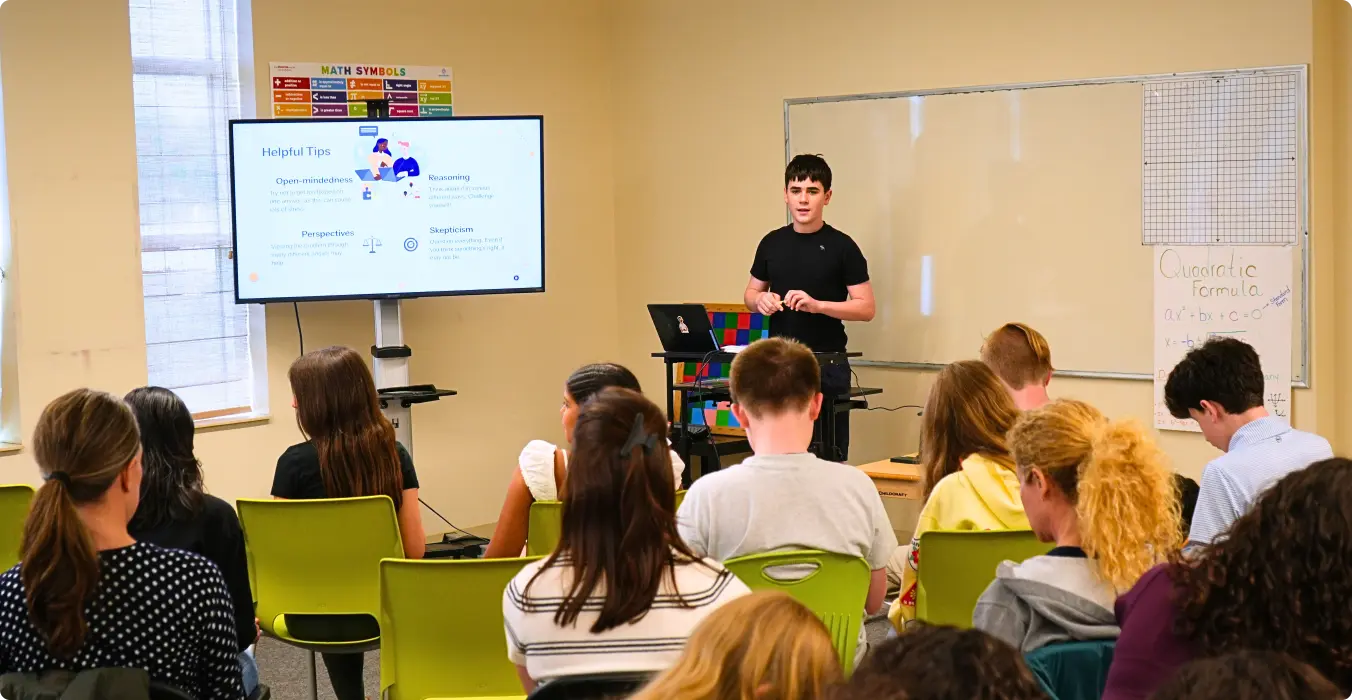
A long-term Independent Research Project gives each student the freedom—and responsibility—to follow a personal interest deeply and turn it into sustained work.
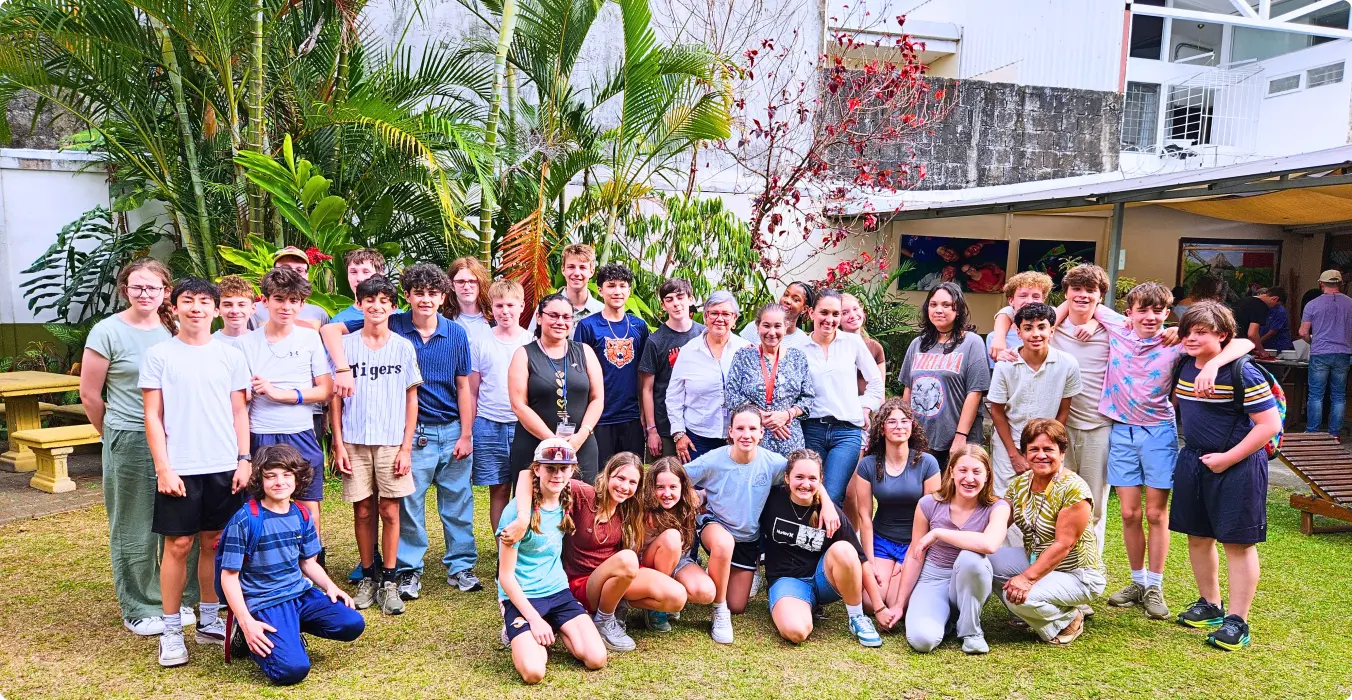
Aspen students learn well beyond campus, from Chicago theaters and museums to regional outdoor learning centers, Washington, D.C., and Costa Rica.
RPMS students spend their final years at our school deepening their sense of self and community. Much like their namesake Aspen trees, our Aspen Middle Schoolers grow from a shared root system—connected to one another while developing their own strength and direction.
Aspen trees—and children—also need plenty of light and open space to grow. After years of self-directed learning, students are ready to apply their practical life skills and flourish beyond our classrooms. They put that learning into practice as they:
Students graduate from Aspen with a stronger sense of who they are and how they can contribute to the world around them.
Aspen classrooms occupy a separate section of our Andersonville building, including a large, centralized space for meeting and collaboration. Our large, airy Aspen wing gives adolescents the space and freedom to experiment, collaborate, and take greater ownership of their learning.
Textbooks, tests, and letter grades are part of everyday life in Middle School; students can also expect nightly homework. This prepares them for a confident transition to high school without losing the independence and ownership central to Montessori.
Aspen students are leaders in our RPMS community, and take on new responsibilities through in-school occupations and internships. As guides and role models for younger students, they begin to see how far they have come.
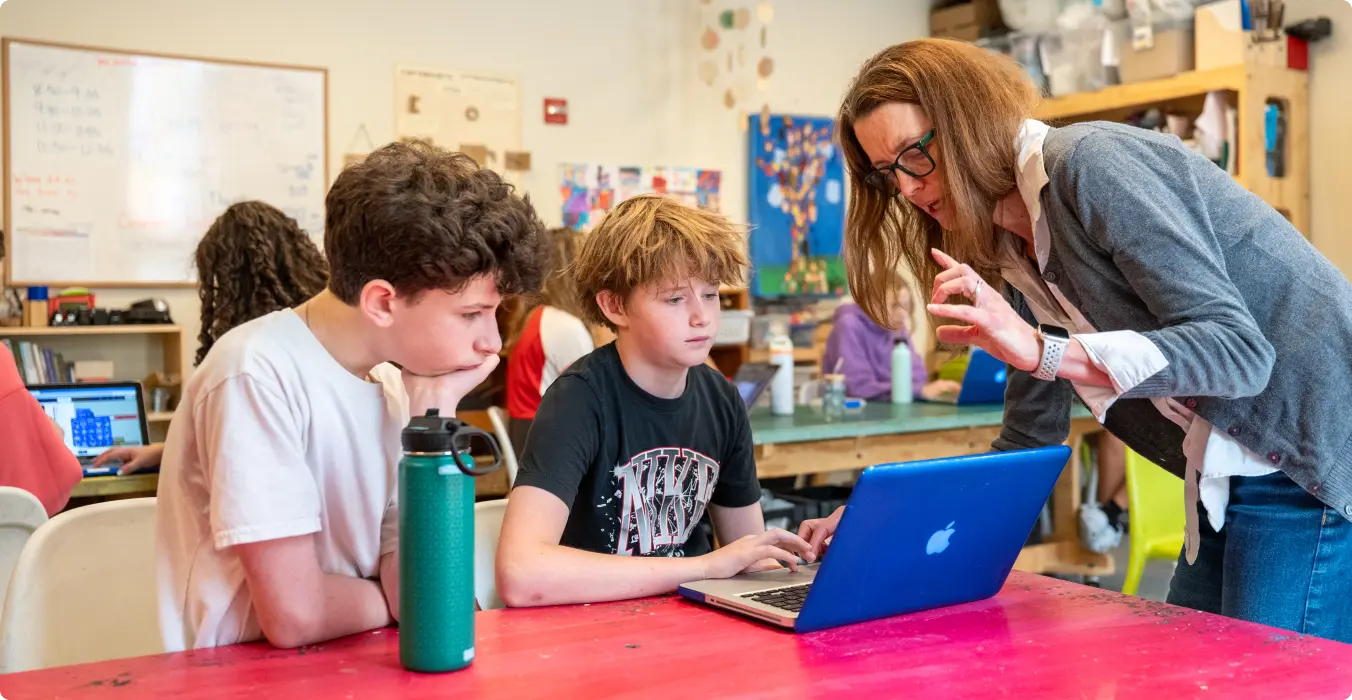
While middle schoolers take tests and receive formal letter grades, learning is still about growth—not just performance. Students are at the center of their personal assessments; they’re encouraged to reflect on their long-term goals, take accountability, and celebrate their progress during their final years at RPMS.
Homework and projects are assessed on an individual basis, while group projects are evaluated for both work and performance.
Families attend conferences four times a year to set goals and review their work and progress. Report cards are sent out four times per year, replacing progress reports and narratives from Lower and Upper Elementary.
Every Aspen student takes the Measures of Academic Progress (MAP) Test twice a year. MAP test scores, high school entrance examinations, grades and attendance are required for many high school applications.
RPMS builds more structure into the school day as Middle Schoolers get ready for the rigors of high school and higher education. Aspen remains rooted in Montessori curriculum while accounting for Illinois State Standards and modern research in adolescent development.
Each middle school student has a check-in teacher; they start each day with this teacher, creating a “home base” and a guide who is uniquely invested in their future.
Students also have access to laptops and the majority of work is submitted via Google Drive. Moving to a shared digital space fosters student-teacher collaboration, and helps students learn to manage and organize their work.
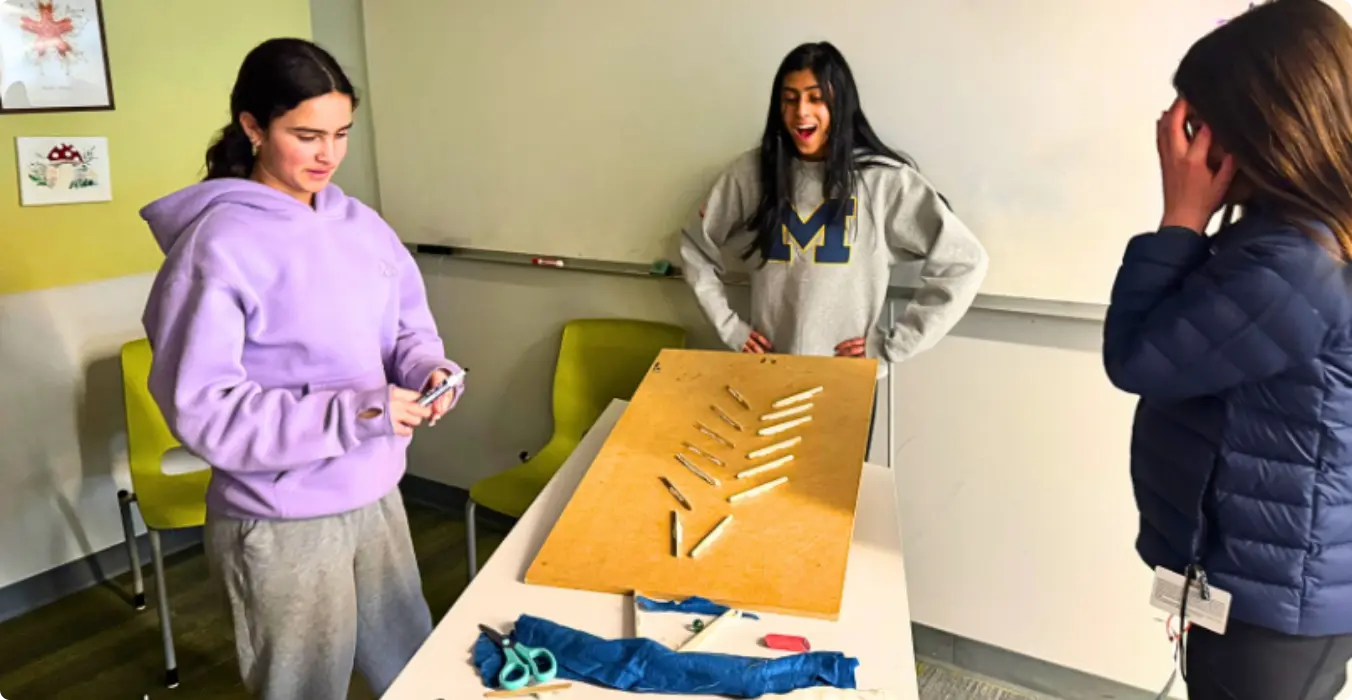

Every day starts with a community meeting, where the class checks in and talks about the day to come. Students also meet with their check-in teacher to ask questions, review their planners, and confirm due dates.

Morning work time is divided into four 45-minute blocks, giving kids focused time to study language arts, Spanish, and math, and to complete independent work. On Fridays, these blocks are dedicated to co-curricular subjects.

After lunch and recess, students dedicate a half-hour to reading, then participate in group work.

Classroom jobs are completed at the end of the day; middle schoolers also have the option to attend homework lab, staffed by a rotating Aspen lead teacher, after dismissal.
The transition from literacy curriculum in Lower and Upper Elementary to language arts signifies our Aspen students’ maturing written and oral communication skills. Language arts skills are incorporated across all areas of our curriculum, and students gain new opportunities to express themselves both in and outside the classroom.
The materials-based approach used in our elementary classes is phased out by middle school. RPMS’ approach to middle-school math allows Aspen students to progress as quickly as they would like, and as slowly as they need to ensure proficiency and accuracy.
RPMS’ social studies and science curriculum exposes our Aspen Middle School students to a new, cycle-driven learning approach. Middle schoolers of all ages experience each cycle together so they learn collaboratively.
Distinct subjects are grouped under common themes throughout the school year, giving students real-world examples of the interconnectedness of the world. Our social studies (Social World) and science (Natural World) themes are woven through all middle school curriculum, including:
Language
Literature
Math
Spanish
Co-curricular subjects including art, music, drama, and gym
YEAR A CYCLE THEMES
Cycle 1: Connections
Cycle 2: Exploration
Cycle 3: Identity
Cycle 4: Systems
Cycle 4.5: Interdependence
YEAR B CYCLE THEMES
Cycle 1: Forces
Cycle 2: Structures
Cycle 3: Power
Cycle 4: Balance
Cycle 4.5: Changes
Moving from RPMS to a larger, unfamiliar school can bring a mix of excitement and uncertainty. Our Middle School Director works closely with Aspen students and their families as they prepare for this next step, offering personalized guidance as they explore high schools where each student can thrive.
Middle School students take increasing responsibility for their education, from monitoring their grades to completing classwork and homework on time. Aspen students manage their own planners and schedules, developing organizational systems that work for them while teachers remain close by with structure and support.
RPMS supports families through the high school entrance-testing process, helping them understand requirements and timelines for exams such as the High School Admissions Test (HSAT) used for choice and selective-enrollment Chicago Public Schools programs.
Each spring, all RPMS eighth graders also complete Spanish proficiency testing. Depending on their results, students may qualify for a Seal of Biliteracy and may not need to take the CPS high school Spanish placement exam.
Personalized guidance is a particular strength of our high school admissions process. Because our Middle School Director knows each student well, families receive thoughtful, individualized help exploring schools that fit who their child is and how they learn.
For families applying to choice and selective-enrollment Chicago Public Schools, the Middle School Director also walks them through the application and helps them consider how to rank their preferred schools and programs.
A: Middle School introduces more of the structure students will encounter next: textbooks, letter grades, tests, and nightly homework become part of everyday life. Students manage their own planners and keep track of their assignments, with a check-in teacher and Homework Lab available when they need support. They still have room to pursue independent research and take ownership of their work—the expectations simply grow along with them.
A: Seventh and eighth graders learn together in one Aspen community. The curriculum alternates between Year A and Year B, so students may begin with either cycle in seventh grade and complete the other in eighth. The entire community explores the same broad themes, while the work itself reflects each student’s readiness.
A: Yes. A large portion of our graduates each year attend selective-enrollment CPS high schools, including Northside College Prep, Jones College Prep, Walter Payton College Prep, and Lane Tech.
Other graduates choose CPS options such as Amundsen, Senn, and Von Steuben, with many entering International Baccalaureate programs. Still others continue at independent, private, or parochial schools such as Beacon Academy, Latin School of Chicago, DePaul College Prep, Loyola Academy, and St. Ignatius College Prep.
There isn’t one RPMS definition of the “best” high school. Our Middle School Director gets to know each student and works closely with families to find a school where that particular child will be challenged, supported, and able to thrive. Aspen graduates leave prepared for the rigor of selective enrollment—and with the self-knowledge to recognize which environment is right for them.
Where children learn to follow their own lead — right here in Chicago’s Andersonville neighborhood.
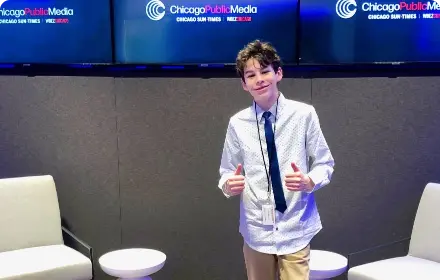
Information about joining the RPMS community, including admissions, tuition, and financial aid.
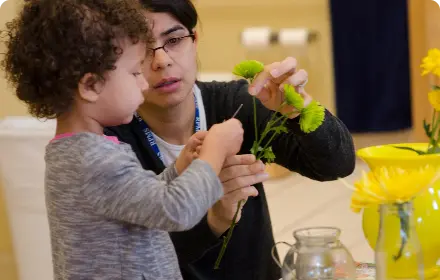
Each stage of our Montessori journey builds confidence, independence, and a lifelong love of learning.
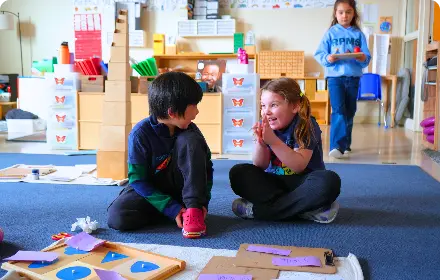
Our shared values guide us to peace within self, relationships, school, community, and the greater world.