

Children ages 3 to 6 continue in Montessori’s first plane of development, a time when they’re rapidly taking in the world around them. As their language, independence, and awareness of others grow, so does their understanding of social order—the rhythms, relationships, and shared expectations that help a community work together.
Children this age learn best through hands-on experiences they can see, touch, and repeat. Montessori materials build on one another step by step, allowing children to practice at their own pace as teachers guide them toward what comes next.
Learning how to be part of a community matters, too. Children practice the grace, courtesy, and cooperation that help a classroom community thrive. This happens through everyday moments like saying “please” and “thank you,” waiting for a turn, helping a friend, or caring for shared spaces.
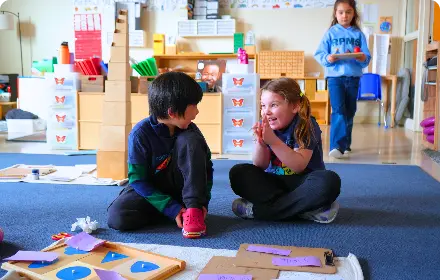
Children’s House is a child’s first experience in an RPMS mixed-age classroom, bringing 3- to 6-year-olds together to learn both with and from one another. In our Catalpa, Juniper, Magnolia, Maple, and Silver Birch classrooms, a child may enter as one of the youngest members of the community, looking to older classmates for examples and guidance, and gradually grow into one of the Kindergartners ready to help and lead.
Here, friendships form around shared interests rather than simply age. It’s common to find a 3-year-old and a 5-year-old poring over a book together or cutting up cheese side by side, or an older child showing a younger classmate where a material belongs. Along the way, younger children see what’s possible, while older children deepen their own confidence, understanding, and sense of responsibility.
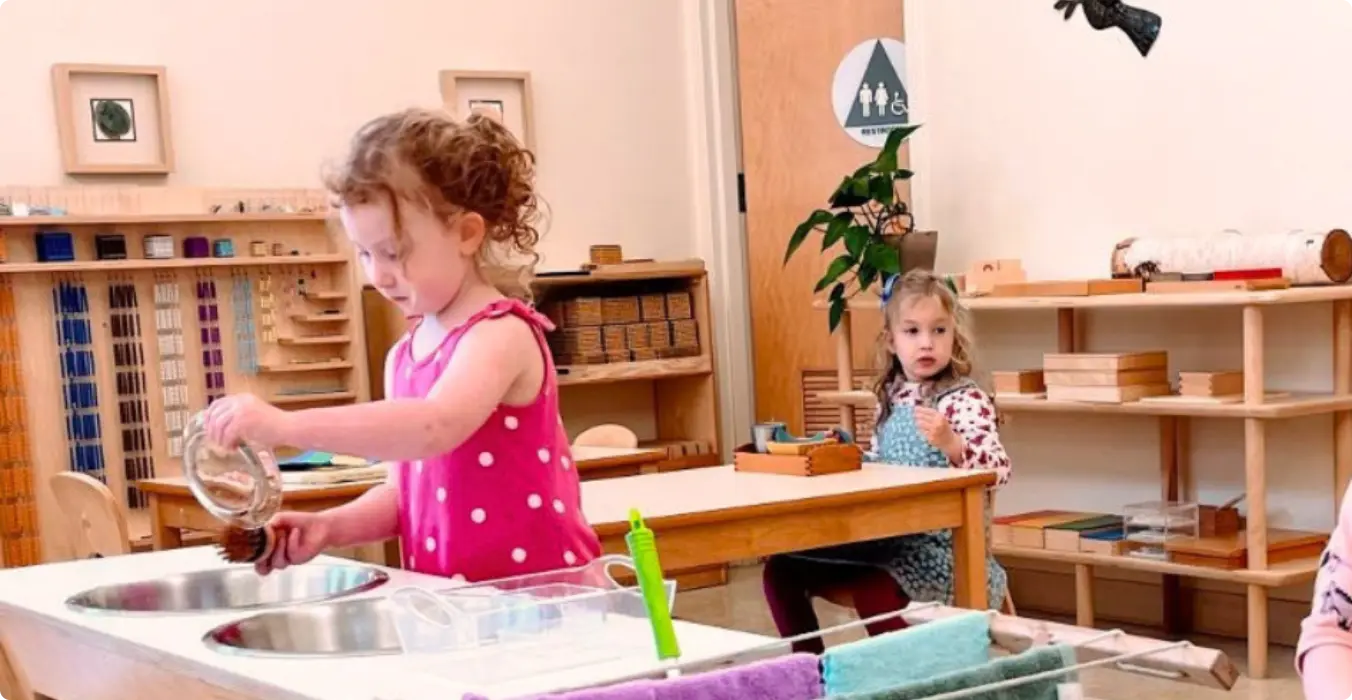
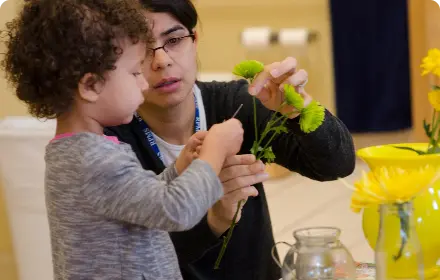
Children are trusted with real, purposeful work – cutting food with a child-sized knife, squeezing oranges for juice, or shaking cream into butter.
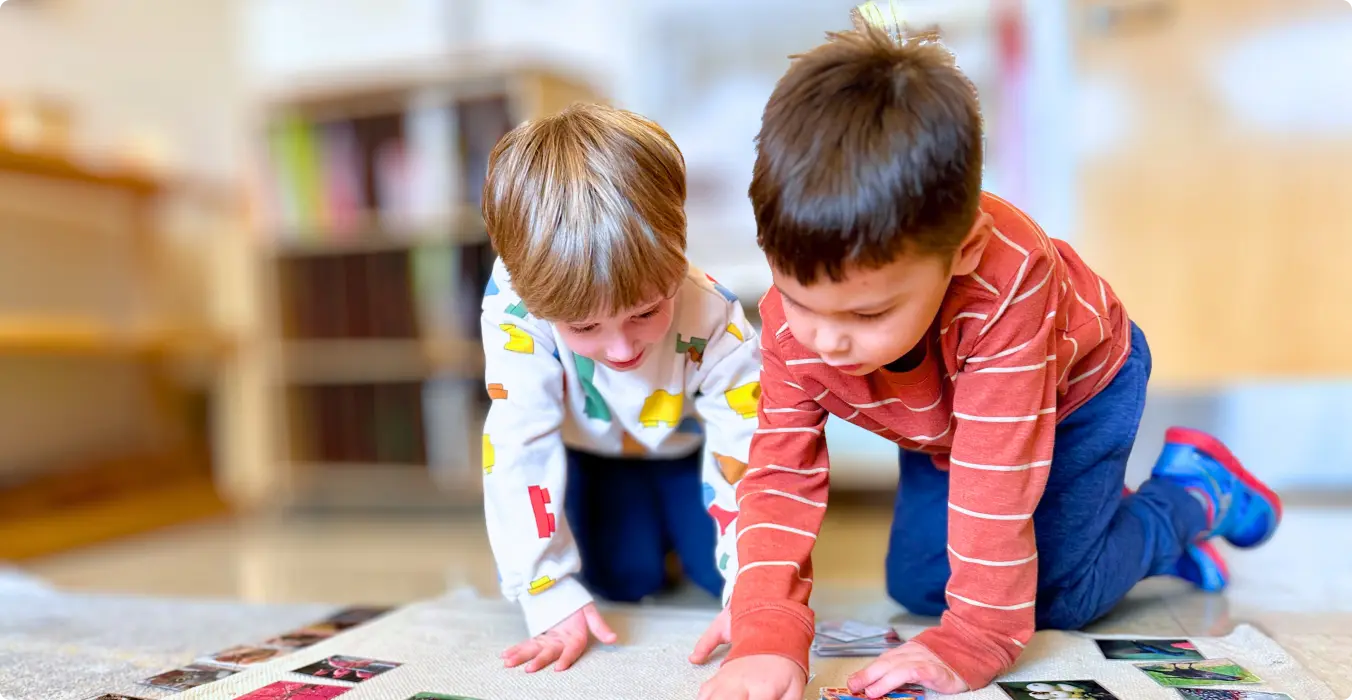
Older classmates step in as guides for their younger peers, showing them how snack time works and where to put away materials.
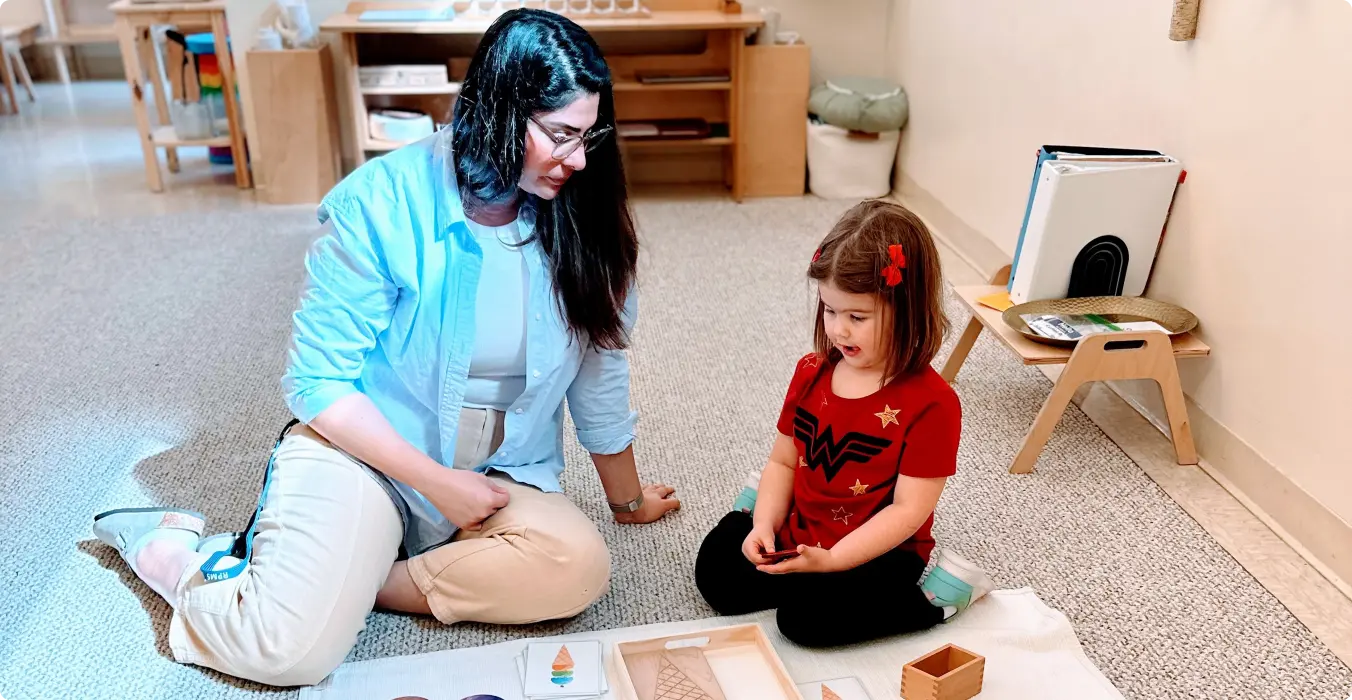
Teachers watch closely as children work, knowing when to offer a new challenge and when to give them more time to practice, repeat, and discover on their own.
The Montessori work cycle grows longer and more complex. Children have more time to choose activities, concentrate, repeat favorite work, and follow their curiosity as new skills and interests emerge.
A wider range of hands-on materials open the door to new learning. Children deepen their work in Practical Life and Sensorial while expanding their learning in language, math, science, geography, and culture.
Art and music are woven into everyday classroom life. Children sing, move, create, and are introduced to artists, musicians, composers, artistic styles, and musical genres as part of their Children’s House experience.
The culminating Kindergarten year opens even more doors. Children take on deeper academic work and greater leadership while adding weekly Spanish and Innovation Studio classes and becoming eligible for after-school programs.
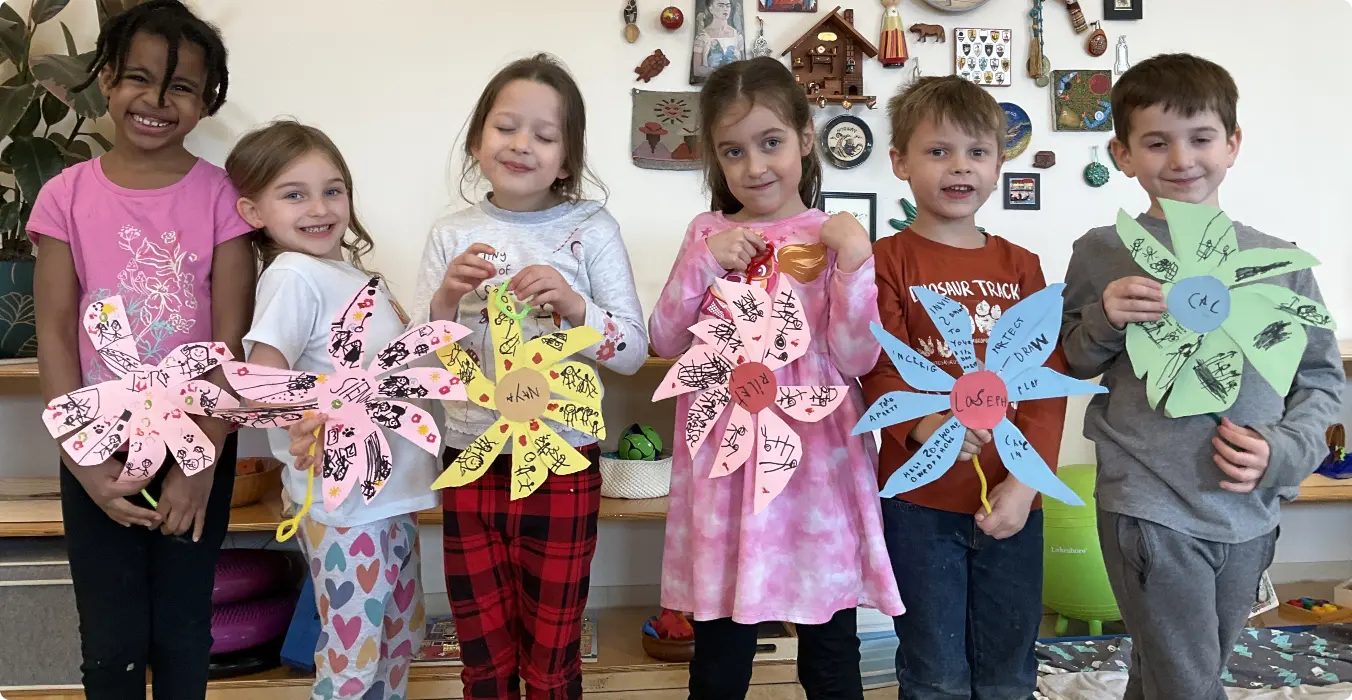
Learning in Children’s House is assessed both formally and informally throughout the year. Teachers observe children closely as they work, keeping records of their progress and using what they see to determine when to introduce a new lesson, offer additional practice, or provide support.
Parent-teacher conferences are held twice each year, and families receive a comprehensive written progress report each April. Together, these observations and conversations give families a fuller picture of their child’s growth, challenges, interests, and successes.
Beginning in Kindergarten, teachers add periodic curriculum-based assessments to their ongoing observations of children’s work. Together, these tools help teachers understand each child’s progress and individualize instruction as children prepare for the transition to Lower Elementary.
Each Children’s House classroom is led by a Montessori-trained and certified teacher alongside an assistant. Over the three-year cycle, teachers come to know children’s interests, strengths, and individual ways of learning, carefully observing when they’re ready for a new lesson or challenge and when they need more time to practice and explore. Together, the classroom team creates a peaceful, caring environment where children feel known and supported as they grow in confidence and independence.
Children must be 3 years old by September 1 and toilet trained to enter our Children’s House program.

Every day starts with a brief morning meeting, where our classroom community greets one another and prepares for the day ahead.

During the morning work cycle, children choose work across the Montessori curriculum, including Practical Life, Sensorial, Language, Mathematics, Cultural Studies, and Art. At any given moment, one child might be reading in the book corner while another creates at the art table or explores early literacy and math through hands-on materials. Teachers move throughout the room, observing children and offering individual or small-group lessons while protecting uninterrupted time for them to concentrate, practice, and explore.
After morning work and recess, 3- and 4-year-olds enrolled in the morning-only program are dismissed. Children in Kindergarten and our full-day programs enjoy lunch and another recess together before transitioning into their afternoon routines.

After lunch and recess, 3-year-olds settle in for a nap while 4-year-olds have a quiet siesta.

At 3:15 p.m., children staying for aftercare join Kindergartners in the Bamboo room for snacks, gross motor activities, and time with friends until pickup.
After lunch and recess, Kindergartners continue into dedicated afternoon programming with their Kindergarten class.
At 3:15 p.m., Kindergartners staying for aftercare join 3- and 4-year-olds in the Bamboo room.
Practical Life gives children meaningful opportunities to care for themselves, others, and their environment. Everyday tasks build independence while strengthening the concentration, coordination, and confidence children carry into other areas of learning.
Sensorial materials help children slow down and notice the details of the world around them. Children explore qualities like size, shape, color, texture, sound, and length one at a time, and learn to compare, classify, and organize what they experience. This builds a foundation for later abstract thinking.
Language is all around the Children’s House classroom. Children expand their vocabulary through conversation, stories, songs, hands-on materials, and everyday experiences, and begin building the connections that lead from spoken language to writing and reading.
In Montessori math, children can see and touch an idea before they’re asked to understand it abstractly. Hands-on materials make concepts like number, quantity, place value, and mathematical operations concrete, allowing children to build understanding step by step at their own pace.
Science, geography, history, art, and music invite children to look beyond themselves and become curious about the wider world. Cultural studies help children notice both the differences that make people and places unique and the needs and experiences we share.
Kindergarten is the culminating year of the three-year Children’s House cycle—a year when children are ready to take on more. As the oldest members of their mixed-age classroom communities, Kindergartners have opportunities to model, help, and lead while continuing to deepen their own learning.
Their experience expands beyond the Children’s House classroom, too. Dedicated afternoon programming gives Kindergartners more time to stretch academically, while weekly visits to the Spanish Suite and Innovation Studio introduce new subjects, spaces, and teachers. It’s a year for asking bigger questions, discovering new interests, and building the confidence to take the next step into Elementary.
Kindergartners enjoy lunch and recess alongside the younger members of their Children’s House communities.
After recess, they come together in dedicated Kindergarten groups for afternoon programming that builds on and extends their morning Montessori work.
Kindergartners also begin traveling beyond their classroom for co-curricular learning, visiting the Spanish Suite and Innovation Studio once each week.
The Kindergarten day ends at 3:15 p.m. Children staying for aftercare reunite with younger Children’s House friends in Bamboo.
Kindergartners are also eligible to participate in a wide variety of after-school programs (ASPs), offering additional opportunities to explore interests beyond the school day.
Kindergartners build on the language foundations established throughout Children’s House, growing more confident as readers, writers, speakers, and storytellers. Montessori materials continue to support individualized growth while children begin applying their developing skills in new ways.
Kindergartners continue working with hands-on Montessori materials as mathematical ideas grow increasingly complex. Rather than memorizing a process before understanding it, children use concrete materials to see and experience the “why” behind numbers and operations before gradually moving toward abstraction.
Kindergartners’ growing curiosity carries them farther into the world as they explore geography, science, history, and cultures beyond their immediate communities. Through hands-on study and research, children begin making connections between people, places, traditions, and the planet we share.
The Kindergarten Cultural Project is students’ first formal presentation. This supported introduction to research and public speaking that grows into increasingly independent and sophisticated work throughout their years at RPMS.
A: Children must be 3 years old by September 1 and toilet trained before entering Children’s House. Our teachers know that young children are still developing independence with clothing, handwashing, and other bathroom routines, and they continue helping children practice those skills at school.
A: All Children’s House students attend Monday through Friday. Three- and 4-year-olds attend from 8:25 to 11:20 a.m., with early arrival available beginning at 7:30 a.m. Families may also add care until 1:00, 3:15 or 6 p.m. on as few as two days per week, allowing them to customize the rest of the week around their family’s schedule.
Kindergarten is a full-day program, meeting Monday through Friday from 8:25 a.m. to 3:15 p.m. Early arrival beginning at 7:30 a.m. and aftercare until 6 p.m. may also be added.
RPMS operates on a school-year calendar, beginning just after Labor Day and continuing through the first full week of June. We also offer nine weeks of summer camp for Children’s House students, providing families with additional continuity and coverage during the summer.
A: Typically, yes. Children remain with the same Children’s House community throughout the three-year cycle, growing from one of the youngest members into a Kindergartner ready to help and lead. This continuity allows teachers to know each child deeply and gives friendships time to grow across ages.
Kindergartners continue spending their mornings in their mixed-age classrooms. In the afternoon, they come together for more advanced lessons and group work that build on the foundation they have developed throughout Children’s House.
Where children learn to follow their own lead — right here in Chicago’s Andersonville neighborhood.

Information about joining the RPMS community, including admissions, tuition, and financial aid.
Each stage of our Montessori journey builds confidence, independence, and a lifelong love of learning.
Our shared values guide us to peace within self, relationships, school, community, and the greater world.